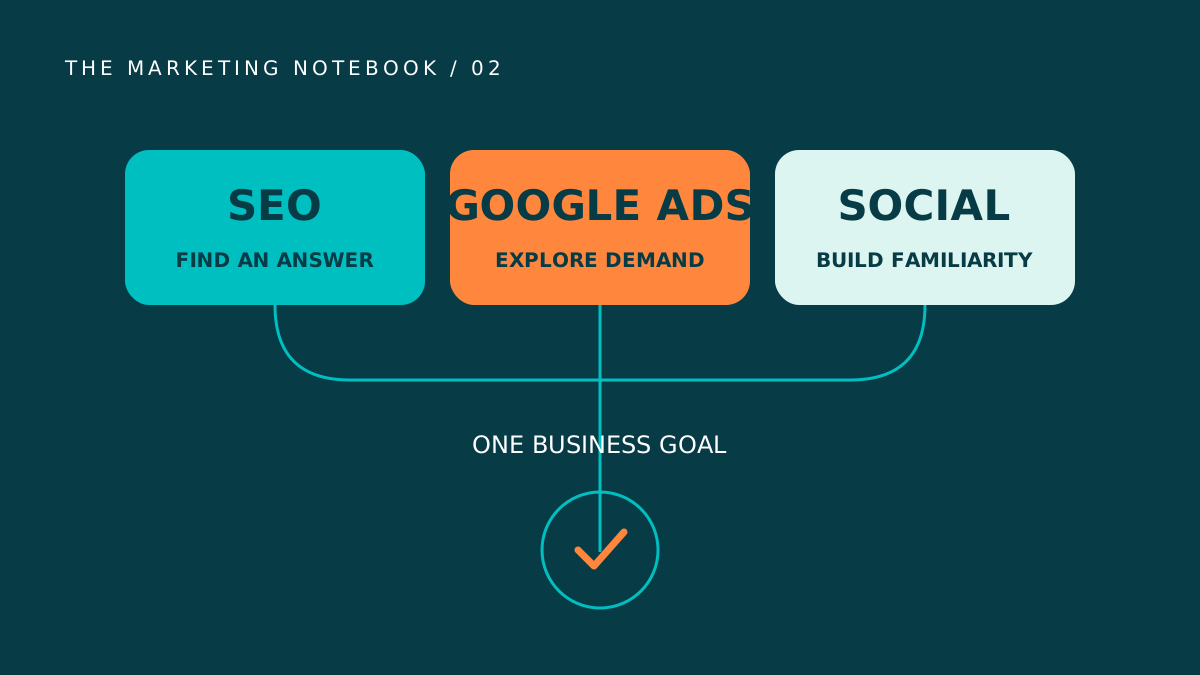
“Should I invest in SEO, run Google Ads or focus on social media?” It is a useful question, but the answer starts with the business rather than the platform. What do you sell, who needs it and what is stopping those people from taking the next step?
Each channel has a different job. Search can connect you with an existing need. Social media can help people discover and understand the business. A useful website can turn that interest into an informed enquiry. Choosing well means matching the channel to a goal and the resources available to support it.
Start with the outcome you want
“More visibility” is broad. “More suitable enquiries for home-renovation projects in Kochi” is more useful. It helps define the audience, message, location and type of action you want to encourage.
Also check the business behind the marketing. Is the offer clear? Can you answer enquiries promptly? Does the website explain what a customer needs to know? A new channel will not automatically solve those problems. Sometimes the first priority is a better service page or a clearer follow-up process.
SEO: improve your presence in organic search
Search engine optimisation helps people and search engines understand your website. It includes work such as improving page structure, explaining services clearly, researching customer questions and addressing relevant technical issues.
SEO is useful when customers search for what you offer and the business can maintain its website over time. An accountant might need useful pages describing the services offered, who they are for and how an engagement begins. Content should answer real questions rather than repeat a keyword.
It generally requires sustained work and patience. Search engines decide what to index and display; no provider can promise a particular ranking. Google’s SEO Starter Guide is a useful reference for understanding that work.
Organic search does not charge you an advertising fee for each organic click. That does not make SEO free: research, writing, development and ongoing review still require time or professional fees.
Google Ads: pay to reach a relevant opportunity
Google Ads can help a business reach people through paid placements. For a search campaign, the opportunity begins with someone searching for something related to the offer. That makes choosing the right searches and destination important.
Consider a repair service that wants enquiries in a defined area. A focused search campaign may be useful if demand exists, the business can handle calls and the landing page explains the service accurately. Broad targeting or unclear copy can attract enquiries the business cannot serve.
Ads can begin delivering after the relevant setup and approval requirements are met, but launch is not the same as finding a profitable campaign. Budget, competition, relevance and the quality of the website all affect what happens next.
Advertising spend pays the platform. Management fees pay for the agreed planning, account work, monitoring and improvement. Google allows advertisers to set an average daily campaign budget; actual daily spend can vary. Review Google’s budget guidance when planning spend rather than assuming every day costs exactly the same.
Social media: build familiarity and encourage conversation
Social media marketing helps you communicate with an audience through useful, relevant content. A person may encounter your business while browsing, rather than while actively searching for your service.
A boutique could show its own products, explain sizing and ordering, and answer common buying questions. A consultant could explain how a project works and share useful observations. The content helps customers understand the business before they decide to enquire.
Organic social activity needs an ongoing supply of ideas, authentic material and approvals. It can also require someone to handle comments and messages. Those responsibilities should be part of the scope instead of being assumed.
Paid social advertising is a separate activity from organic publishing. If you want to promote an offer on Meta, campaign management and advertising spend need their own plan. A busy social feed alone does not guarantee reach, leads or sales.
Compare the work behind each channel
| Channel | Customer context | Timing and effort | Cost structure |
|---|---|---|---|
| SEO | Often searching for a relevant answer or service. | Ongoing site and content improvements; results take time. | Time or professional fees for research, content and implementation. |
| Google Ads | For search campaigns, an active search for something related. | Setup, approvals and continuous review; useful results are not immediate or guaranteed. | Platform ad spend plus any separate management fee. |
| Organic social | Discovering, learning about or staying connected with a business. | Consistent content, approvals and conversation handling. | Time or content and management fees; paid promotion is extra. |
Why a combination can make sense
The channels can support different parts of the same journey. A customer might discover a business on social media, search its name later and use the website to compare services. It would be misleading to credit only the last click with the whole decision.
A business could use SEO to improve its core service pages, a focused ad campaign to explore a particular offer, and social content to answer questions that arise repeatedly. The point is to give each activity a useful role, not to buy every service at once.
The examples here are hypothetical planning situations, not client results. A combination only makes sense when the business has enough budget, content and follow-up capacity to support it.
Choose your first move with five questions
- Is there active search demand? If people already look for your service, search deserves consideration.
- Do customers need to see and understand the offer? Visual demonstrations and useful explanations may give social content a role.
- Is your website ready? Fix unclear information or a difficult enquiry path before paying for more visitors.
- What can you sustain? Include content creation, approvals, account management and customer follow-up in the resource plan.
- What would count as progress? Agree useful enquiries or other meaningful actions, not just follower growth or clicks.
Choose one priority, establish a baseline and review the evidence before expanding. Small samples and incomplete tracking limit what you can conclude, so combine the numbers with real customer feedback.
If you would like help making that choice, explore SEO, Google Ads management and social media marketing, or share your goal with me. A clear brief is a better starting point than a platform picked in isolation.